Thought of the Day: On Virtual Goods

November 21, 2009

People already waste so much money on buying all sorts of random crap, so it’s hard to argue that a virtual pet or virtual dress is any worse value than some of the rubbish I’ve seen (presumably for people to foist on their ‘friends’) while Xmas shopping this year.


The Worst Storyline in Wrath

November 20, 2009

I know that a lot of players feel that storytelling is a sideshow to the main event in games; it doesn’t involve gameplay, and it’s seen as fluff to keep the punters/ fanfic writers amused. I don’t agree with this view, I think the role of storytelling in games is to make encounters feel meaningful – why else would we care about characters and avatars like Lara Croft, Sonic, sackboy, Commander Shepherd; might as well just represent the player by a  giant blue square.

But like it or not, the quality of storytelling and NPC design has a huge effect on how players respond to different parts of the game. Or in other words, the virtual reward of being able to deliver a good kicking to an NPC who people truly hate is on par with epics for a lot of people. After all, the epics will get replaced soon enough, but the storyline is a lasting memory and experience.

So, in that vein, which is the most unpopular storyline in Wrath? It’s undoubtedly the blue dragonflight – we kill an aspect (that’s like a demi-god) and no one cares. A few completists wonder whether that story was supposed to tail off, and everyone else is glad that Blizzard seems to have buried it. This is partly because of an unpopular raid fight which involved awkward vehicles, but it’s also because the writing didn’t make us care.

Piss him off by killing his consort? That was your entire plan?

malygos

I’ve had the great misfortune to play through Colderra again on an alt recently. It’s a subzone of the Borean Tundra in Northrend (ie. this is Wrath content) and although it’s not horribly painful as an experience, it’s also not a shining beacon of level design. Kill 10 x, collect 10 x, return to quest giver and be told to kill or collect x other things. And so on.

But the low point of the zone is the Keristrazsa questline. A game like Dragon Age would have nailed that storyline, because it has all the right elements. A wronged prisoner seeking righteous revenge, enlisting the PCs help, everything goes pear shaped and she ends up in a worse state than before, doomed to have her mind broken and forced to become Malygos’ new consort.

Now that really should have been good story material. But not in the hands of Blizzard writers, oh no.

What actually happens is this:

You discover the arcane prison and one of the NPCs at the local base is able to unlock it. He tells you to open the prison at your own risk. When you do so, a pretty girl who is really a dragon appears. Malygos (big bad dragon aspect who will die to countless raid groups later on) has imprisoned her – boo. We don’t entirely know why but she’s out for revenge.

You agree to help, having already been told that the blue dragonflight are the bad guys here. She has you gather some stuff so that she can lay a trap for Malygos’ consort, who you later kill on her behalf. OK, so that was kind of random revenge fantasy on the NPCs part but I guess she has been imprisoned for ages and that has to take it out of you.

Then she moves to the next stage of her plan. She has you lay out the consort’s corpse on the ground and she burns it, and calls out to the dragon aspect to come look at what she has done. Now, this really should set danger warnings  because dragon aspects are very badass. In any case, he comes out of the Nexus to mourn? (Well, he laments about the consort so he’s actually got more sympathy at this point than the NPC you’re helping.) Keristrazsa literally flies loops around him for no special reason, she doesn’t seem to want to attack. Then she lands, tells you to run away and … Malygos comes down and spirits her away to an instance. I’m not sure why being frozen in an instance is going to persuade her to be his consort. In any case, when you get to the Nexus, she’ll beg you to kill her so she can hand over some epics … or something.

It’s just that bad. It doesn’t make sense on any level, it’s confused, the characters are stupid and yeah. I got nothing. Dragons have really failed to impress. Again. Except Onyxia.


Icecrown: The self-nerfing raid

November 19, 2009

Blizzard have really outdone themselves with this one. The plan for opening up the Icecrown Citadel (the raid instance which is coming with the next patch) has been released. They’ve thrown the kitchen sink at it. It’ll have bosses gradually being unlocked as time goes on, bosses only being unlocked if you kill previous bosses within a limited amount of tries, and the whole instance actually coded to get a bit easier over time by dint of a raid buff that increases as time goes on.

So imagine a self-basting chicken if it was a castle full of undead. Instead of Blizzard having to take it out of the oven every so often to pour fat over it/ nerf it, they can just leave it in until it is done.

Larisa echoes my thoughts on forcing limited attempts. It punishes people who wanted to go into the instance blind, or who have raid members with poor connections, and puts undue stress on the learning side of the encounter. Limited attempts is something you do to spice up farm raids.

Self-nerfing raids forces people to raid to Blizzard’s schedule. This has happened to some extent anyway but if like us you raid on a relaxed schedule, it’s hard to know what that will really mean for the difficulty side of things.

I think what they’re aiming at is that the limited attempts (and the number of attempts allowed also increases over time) should  let the hardccore stay ahead of the rest for a short while at least. The autobuff should make it easier for PUGs to form towards the end of the raid’s lifecycle.

But none of this is really ideal for players who would prefer it if their own raid group could select the difficulty. A group like mine doesn’t need limited attempts, we already have a relaxed schedule and aren’t going to sweep through the instance in a week. All that does is add extra stress for us. But since we’ll also be gearing up and getting more practice in, I’m not sure we need the increasing raid buff either.

I don’t think any of these ideas are bad on their own, but I’m not sure how well they all will work together. Can you really throw in some stuff for the hardcore and some for the casuals and bake it all in the same oven? It will be interesting to find out, and to see what players do with it.


First alt is for fun, second alt is serious business

November 18, 2009

Do you remember the first character you played in your first ever MMO?

You probably didn’t bother to go look up optimal builds on bulletin boards, you didn’t care or even understand what the endgame was and you certainly had no plans for what you’d want to do with your character later on. Maybe you picked your character because you liked the look, or it fitted some favourite genre concept, maybe it was based on an old pen and paper character, or a favourite character from a book, film, or comic.

In any case, you logged in and the whole experience was a voyage of discovery. You were learning how to play, exploring the game world, figuring out how to interact with other players and NPCs, and probably making lots of mistakes and doing lots of things that you’d later judge to be embarrassingly bad. But it was fun. It must have been fun because you stuck it out long enough to either learn better or to start another alt. On the next alt, you used all the things  you had learned about the game from your first character. You were able to save time, make sure to pick up important quests and items, and probably had a much smoother ride through the game.

And it’s funny that in some games, you can go back and ‘correct’ any mistakes more easily than others. In a level based game, you can go back and repeat old levels if you want to make sure to pick up all the loot, grab all the achievements, or finish up anything you forgot last time. Although modern MMOs make it easy to change many things about your character if you later decide that you chose badly, the experience of nonoptimal levelling will stay with you. It won’t affect your character later in the game; you can replace gear, repeat any rep grinds that you missed, and so on. But you will know that you could ‘do it better’ if you ever wanted to start again.

That lends a lot of replayability to a game. It’s the notion that if you start again, your experience will be sufficiently different to be interesting (or at least, more interesting than mooching round the endgame and doing daily quests ad infinitum). It might be different because you pick a different class, level in different zones, pick different difficulties, or because the game has some randomness built into the levelling game.

I was thinking about this with Dragon Age. I finally gave in to my story fixation and set the difficulty to Easy permanently for my first play through, and I love the extra flexibility that this gives my game. I can pick companions because I like them and not just because they have classes or abilities that I need to beat the difficulty. I don’t have to stress over character builds or loot, I’ll just make do with whatever I get that looks interesting. And I can still get through the game, experience the story, and learn enough about the mechanics that I can play through again on a different character with a harder mode later.

Or in other words, I gave myself permission to just have fun and it let me focus on the parts of the game which I most enjoy. Next time, I’ll already know the basic storylines so I’ll be able to focus on other sides to the gameplay. I enjoy the combat, I just don’t want to spend too muc time on it right now.

But you can never have that initial experience of just having fun in the game again. Next time through, you cannot help being more knowledgeable. Lines of dialogue that made you laugh out loud in surprise the first time through will only raise a smile. The badass boss that beat you three times before you changed your strategy and smacked it down? You’ll get it first time of course, because you figured out that strategy yourself.

The relaxing thing with a single player game is that you can take your time. But in MMOs, we often rush through the fun parts as fast as possible. It makes me wonder whether all MMOs should make you play through solo first for awhile, to give you space to learn and explore, and only then let you loose on other players after everyone else has had their fun.


The convergence of single player and multiplayer games

November 17, 2009

There’s a rumour going around that the next wave of Call of Duty games will include  options to buy into online subscription extras. So you’ll buy the game, and also be able to sub up for whatever services they decide to provide online. Maybe they’ll throw in some additional DLC on top.

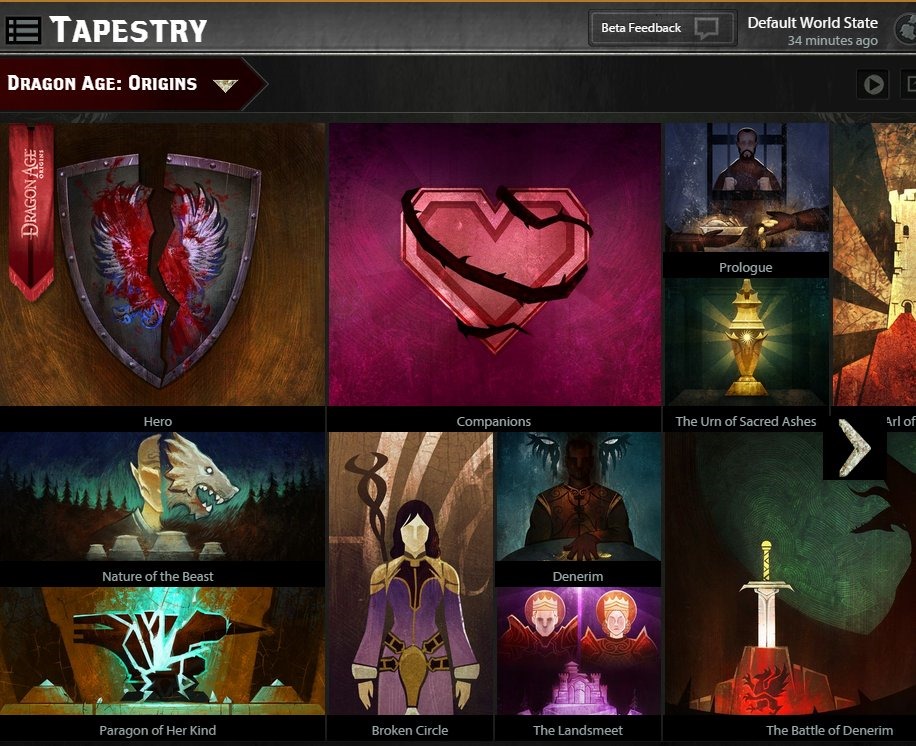
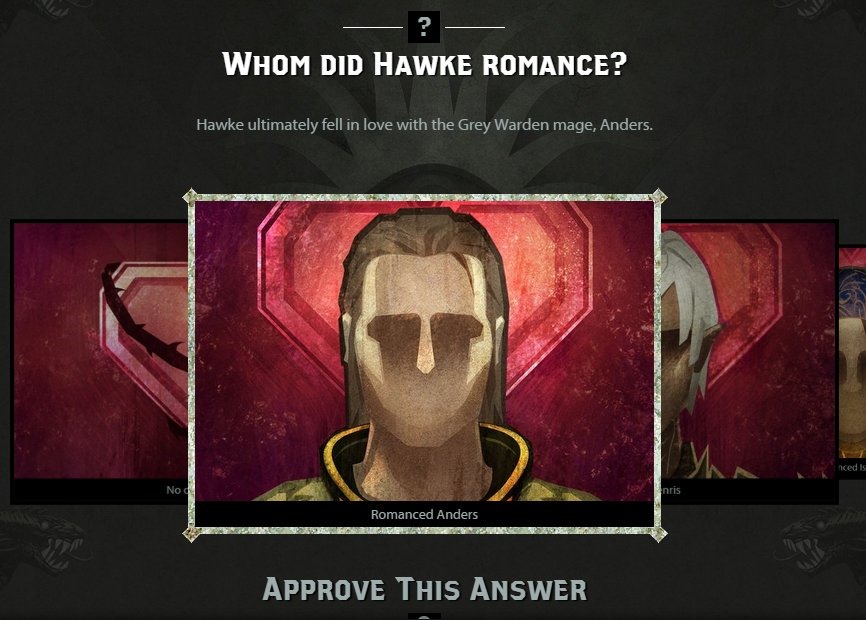
Dragon Age is a single player game, with a 2 year DLC plan (38% through now, and how about them deep roads, by the way? Now that’s how to do horror.) They also have a social site where you can compare quests and achievements with friends, and a bulletin board too. Plus a tie in with their flash game to earn more loot for the standalone game.

And does anyone not think that Starcraft 2 and Diablo 3 will also have subscription options?

Increasingly we’ve seen MMOs also poking around with models which involve box sales plus monthly subscriptions for extra content/patches/server maintenance, and options to buy extras via a cash shop as well.

There’s a convergence coming, and as MMO players, it’s all about how the gaming side took over the virtual world. And about whether we really want to be playing with massive amounts of people anyway. How much difference is there really between logging on for the weekly COD session with friends or the weekly fixed group in a MMO?

These days we understand a subscription as meaning a stream of ongoing content, and complain if the content doesn’t come fast enough. All those things that old MMO dinos lament about the good old days nowlook laughable because so many of the old MMOs were simply bad games. Poor gameplay, poor balance, timesinks, complexity … none of these things made for great gameplay. But the gameplay wasn’t the compelling factor that people miss. Those days of MMOs as virtual worlds are almost gone now, and I wonder if  that is the big reason that new MMOs struggle to get players to sub for more than a month or two.

It isn’t just their merits as games, it’s that perhaps the majority of gamers are looking for doses of solid gameplay, rather than a new virtual home.


The Changing Face of WoW Customer Relations

November 16, 2009

Eric@Elder Game posts a typically thoughtful look at customer relations in MMOs, and especially on how some teams are very forthcoming in admitting their faults and keeping players informed about what they are doing, where others maintain a (more professional?) silence.

It is very clear that with Warcraft, Blizzard has been moving more and more in the direction of sharing information and views with the players. The latest example of this is in an excellent interview that Rob Pardo gave to Warcry.

They ask what he thinks the biggest mistakes were with WoW, and he specifically names the arena.

If I was going to pick on a game design thing that I look back on and think was a mistake? We really never designed WoW to be a competitive e-sports game; it was something that we decided to start tackling because there was such a desire and demand to evolve it in that direction, to introduce competitive arenas. I’m not sure that that was the right thing to do with the game.

This is not something that I’d have expected to hear from anyone highly placed inside Blizzard even a year ago. But now, the mood has changed, and the style of customer relations has changed too. And it’s OK to admit what everyone already knows – balancing for PvE and PvP has been a huge hassle and will continue that way too.

Rob also discusses other recent changes in WoW, and the move to a more casual friendly game from the perspective of someone who himself used to be a hardcore raider in EQ.

We had all these suppositions, and as the years went on and we had more and more experience living with WoW as a live game, we realized that they weren’t just truths. They might affect a hardcore minority, but the people we saw weren’t really as hardcore as we thought they were. If we reduced raids from 40 to 25, we saw, it makes it more fun. You might have some hardcore players who get upset, but keeping people out of content isn’t right for the game overall. We mellowed sometimes, and realized we were wrong.


Dragon Age: So, what did you do at Redcliffe Castle?

November 14, 2009

This isn’t a matter of life or death, it’s more important than that …

For many fantasy fans,  it’s a crucial part of the genre that heroes be heroic and that doing good deeds  is rewarded in stories. If that is important to you, you will not enjoy playing Dragon Age.

It is clear from early on in the game that this is a dark fantasy. Very dark indeed. Even where it is clear that evil needs to be fought, the people who fight it are far from good themselves. The vaunted maturity of the title means that players have the option to choose between the lesser evil and the greater evil, and to decide for themselves whether the means justifies the ends. And the game will not punish the player unduly for making the nastier choice; sure, some of your companions may disapprove but the game isn’t biased towards one type of morality over another. Being good won’t be punished, but there’s no inbuilt reward for it either.

One of the earlier moral dilemmas faced in the game takes place at the human stronghold of Redcliffe Castle. I was fascinated by an rpg.net thread which asked players to discuss the decision that they made there in game, and to justify it. The thread is full of spoilers for that part of the game, but I was impressed that different players made spirited defences of all the different options available.

As a GM, I found the storytelling consequences just  a little cheap (it wasn’t as true a moral dilemma as it probably should have been), but the device did work. It made people stop and think. And I can’t really talk about it without spoiling the encounter so I’ll stop there.

But if you are playing through DAO, do check out the thread. It’s really quite interesting to see a storytelling device play out that’s rather richer than we are used to in MMO questing.


Dragon Age, and the unending battle of fluff vs crunch

November 14, 2009

I am still working my way through Dragon Age, and still thoroughly enjoying the game. While people agree in general that the game is of high quality, there is a split of opinions online as to how well it actually works … as a game. All of these games which tell stories have to provide a mix of storytelling (ie. exposition, introduction of NPC characters, exploring the world) and actual gameplay. So it isn’t surprising that different players value different parts of that mix in different ways.

Brainy Gamer has a fair summary of gameplay issues, particularly with how persuasion works in the game. (This has been an issue with pen and paper games since forever also. How DO you play a character who’s smarter or more persuasive than you are in real life? In P+P we either roll the dice, or the GM shrugs and has the characters respond as though you were being convincing.)

evizaer picks apart the combat gameplay

Mitch Krpata finds that the game doesn’t do anything to show a non-RPG guy how to play or relate to it.

It’s also not surprising that a lot of MMO players are really digging Dragon Age. The mixture of quests, exposition, combat gameplay, and large world setting isn’t that different from the MMO standard, but being a single player game, DA is far more tailored for the single player experience. The UI is familiar, the basic tactics are familiar (crowd control? heals? tank? check.)

Neither is it surprising that a lot of gamers like the game, but criticise the gameplay. It does feel awkward to show such awesome storytelling, and then follow it up with a scene where you run around picking up everything that isn’t nailed down. That doesn’t really help the story, and it feels old fashioned. Really, everything your character owns or acquires should have some sort of story behind it, whether you earned some money and bought it from a merchant, or it was gifted to you. Picking up loot from random monsters is often daft, and grabbing everything in sight in town is just stealing.

I also agree that letting you queue up commands on characters in combat, or switch to a full turn based option, would have improved the combat experience. In many ways, DA isn’t even trying to raise the bar or change anything major about RPG gameplay – a genre which is old and already feels strained. Even as a roleplaying game, DA is an awkward mess of old skool D&D tricks such as old fashioned puzzles, problems that can be solved by killing more stuff and dungeons with the equivalent of 10′x10′ rooms with traps and wandering monsters, and more modern RPGs which take a more story based or character based approach and offer more nuanced moral dilemmas.

But still, somewhere along the line players have to decide whether the good side outweighs the bad, and that’s a personal decision. Whether the fluff (everything that isn’t direct gameplay, like dialogue, story, worldbuilding, character design and animation,  achievements) outweighs the crunch (hard gameplay, stats, how gear relates to performance). And when the fluff is this good, it feels churlish to ignore large steps forward in one side of the game and just cavil about locked chests.

Dragon Age is one of the most immersive RPGs I have ever played. The human noble origin brings tears to my eyes (I’m a sucker for stories where a character’s beloved parents die, probably because my mother died young). I have felt genuine regret at decisions I have taken in the game, I’ve certainly wanted to shout at some of the characters. And I’ve laughed at others. That sort of strong emotional response shouldn’t be brushed away as ‘Well, the storytelling is OK I guess.’ It’s far more than OK. It’s the response you feel to a good film or a good book. This is why people love it, and the tactical gameplay is probably better than most MMOs.

You can’t compare that to a game on rails like Uncharted 2. Yes, the cut scenes in Uncharted are great. But they’re just bridges to the next platform/shooter section. I don’t care about those characters, except that they amuse me. The cut scenes in DAO are interactive, and although that just means picking options from a list, it also means that you have ways to drive the story forwards in different directions.

As a gamer, I’d love to see better gameplay for interpersonal interactions. There’s no reason why dialogue shouldn’t be as exciting as a shooter – it’s easy to imagine scenarios where someone’s life could just as easily depend on how a conversation proceeds as how quick a player is on the draw. It’s totally fair to criticise DAO for not even trying to advance the state of RPG gameplay.

But it feels harsh and one dimensional to me to fail to note the advances the game has made in the areas of storytelling and immersion. I never wanted to cry when I was playing Uncharted 2 (except possibly in frustration at not knowing where I was supposed to go).


Death of an Old God #1

November 13, 2009

killedyogg

We killed Yogg-Saron in a 25 man raid this week. It was the second kill for the raid, but the first one in which I was there. So now I have helped to kill an Old God, and it’s time to move on. I missed all the 10 man kills so I’m very glad to have been in for this one. There is a sense of closure from clearing the instance, even on normal mode.

I enjoyed Ulduar very much, and the Yogg fight was fun to learn. It was busy, and exciting, and there was plenty for everyone to do and to remember. Phase 1 was probably one of my favourite tanking fights in Wrath so far (I just like kiting mobs around, picking up adds, and dodging environmental damage.)

If it feels bittersweet, it’s because this was my last remaining goal from patch 3.2. I’m sure we’ll enjoy the remaining hard modes, but somehow they just don’t ping me as goals in the same way.


The headset is my ears, the monitor is my eyes

November 13, 2009

I have seen it with my own eyes ….

It’s amazing how easy it is when we’re deep in a game for our brains to convince us that we are seeing the virtual world directly through our own eyes, and hearing it with our own ears. I’ve had times when I wasn’t aware of the headphones or the monitor. Immersion will do that to a person, and the human brain is smart but can be trained to substitute one metaphor for another – after all, I don’t much notice my glasses when I’m wearing those either.

But all it takes to break the illusion is one little hardware problem. The monitor blows? You’re (virtually) blind. Broken sound card? You’re (virtually) deaf. It’s tricky to talk about this without being disrespectful to people who have sensory disabilities in real life, but being without a peripheral can feel absolutely crippling in game.

I’ve had an ongoing problem for a few months with my microphone, in that it’s way too quiet. This week, we sorted it out (turns out it was something stupid that I’d done which was easily fixed, once we’d found it), and it’s astounding to me how much difference that made in my gameplay.

I could speak on voice chat before, but it was very hard for people to hear me. They would keep asking me to speak up, or complain that they couldn’t hear, and there wasn’t anything that I could do about it. It was frustrating because it broke the metaphor, in real life I can speak up by just raising my voice. But that didn’t work with a malfunctioning mike. It was so frustrating in fact that I mostly stopped even trying to talk, and along with that came a feeling of distance, of unintentional exclusion, and of being less involved in both the game and the community.

Of course I could still type wittily (and quickly), but as anyone knows who has played with voice chat, a lot of people don’t bother looking at the text on the screen. But my disability was relatively easily fixed. I have my voice back. This week I noticed that  every time I am to say something in game, I  hesitate more than I used to do. I still think ‘Oh, no one will hear’, even though they can now.

I’m happy to have my virtual voice back, and it will be nice to feel back in the loop and get used to it again. But that was a very powerful emotional experience, and I’m still not entirely sure what to make of it.